Editorial method: This guide is documentation-based. It does not claim a physical tasting or product test unless a dated protocol, sample source, conditions, and evidence appear on the page. Confirm package-specific ingredients, origin, certification, directions, caffeine, storage, and safety information with the manufacturer or physical label.
Matcha vs coffee: the quick verdict
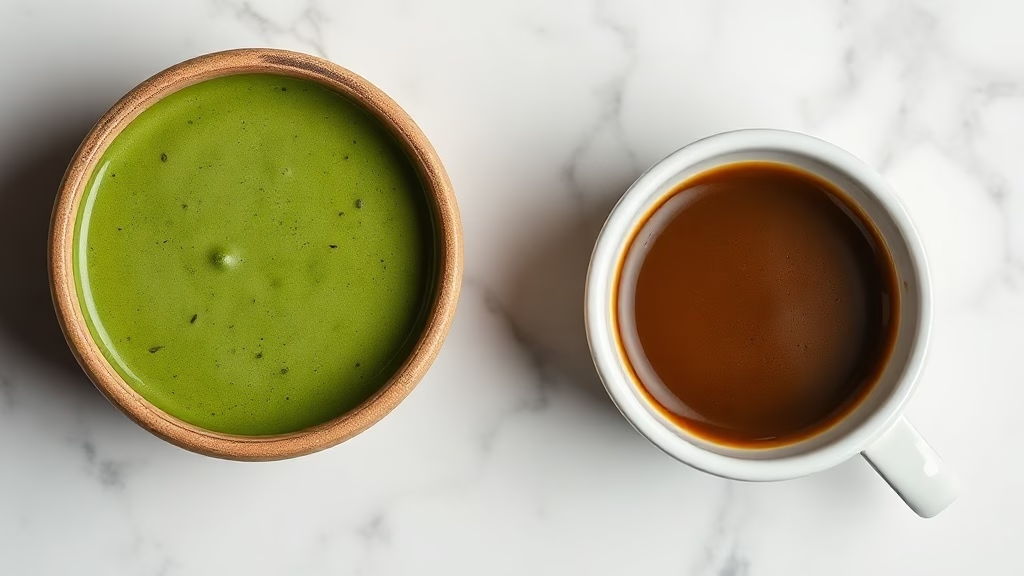
If you want a fast answer before the details: coffee gives you more caffeine per cup and a sharper, faster lift. Matcha gives you less caffeine but a steadier, calmer energy thanks to an amino acid called L-theanine, which tends to soften the jittery edge and the afternoon crash. Coffee usually wins on convenience and upfront cost per cup. Matcha usually wins on smoothness, focus, and ritual. Neither is “better” in the abstract; they suit different people and different parts of the day.
Side-by-side comparison
| Factor | Matcha (ceremonial) | Coffee (brewed) |
|---|---|---|
| Caffeine per cup | Moderate, generally less than a similar-size coffee | Higher per typical serving |
| Energy curve | Gradual rise, gentle taper; L-theanine adds calm focus | Fast spike, often a steeper drop |
| Taste | Vegetal, sweet, umami; creamy when whisked | Roasted, bitter, bold; huge range by bean and roast |
| Cost per cup | Higher tin cost, but small servings stretch it | Usually cheaper per cup at home |
| Prep effort | Sift, measure, whisk; a few mindful minutes | Press a button or run a machine; very quick |
| Antioxidants | Whole leaf consumed; rich in catechins like EGCG | Also antioxidant-rich, mainly chlorogenic acids |
Caffeine and the “no jitters” L-theanine effect
Both drinks contain caffeine, but the experience differs because of what comes alongside it. Coffee delivers caffeine more or less on its own, which is why a strong cup can feel like a jolt. Matcha pairs caffeine with L-theanine, an amino acid concentrated in the tea leaf. Because you whisk and drink the whole ground leaf rather than steeping and discarding it, you get a meaningful dose of it.
The crash: why matcha tends to land softer
The “crash” is the slump many people feel a couple of hours after coffee, often paired with a fresh craving for more. It is partly a quick caffeine rise and fall, and partly the way a fast spike can leave you depleted. Coffee’s speed is genuinely useful when you need to be alert immediately, but that same speed is what sets up the dip.
Matcha behaves more like a slow release. The energy tends to come on gradually and taper gently, which is why people describe it as steady rather than spiky. You are less likely to hit a wall at 2 p.m. and reach for a third cup. That is a common reason people give for switching: not that coffee stopped working, but that the comedown stopped being worth it.
Cost per cup: the honest math
A good tin of ceremonial matcha costs more upfront than a bag of beans, and there is no pretending otherwise. But the per-cup picture is closer than it looks. A standard serving is only about a teaspoon of powder, so a tin stretches across many cups. Coffee is still usually cheaper per cup brewed at home, and dramatically cheaper than a daily cafe habit.
Where matcha quietly competes is against takeout. If you buy a coffee out most days, switching even part of the week to matcha at home can come out even or ahead, while giving you a calmer cup. If you grind premium beans at home already, coffee likely keeps the cost crown. Choose with your real spending in mind, not the sticker price of the tin.
The ritual: minutes that change the morning
This is where the two diverge most. Coffee is built for speed; you can have it in your hand before you are fully awake. That is a feature, not a flaw. Matcha asks for a few minutes: sift the powder, add water just off the boil, whisk until it foams. Those minutes are the point.
Who should consider switching
Switch, or at least split your routine, if coffee leaves you jittery, anxious, or crashing hard by afternoon, or if your stomach protests on an empty morning. People who want sustained focus for deep work often prefer matcha’s steadier curve. It can also be a gentler choice if you are trying to dial back a heavy multi-cup habit.
FAQ
Does matcha have more caffeine than coffee?
Generally no. A typical cup of matcha usually carries less caffeine than a similar-size cup of brewed coffee, though it varies by serving size and how strong you make each one. Matcha’s advantage is the steadiness, not the raw amount.
Why does matcha not give me jitters like coffee?
The likeliest reason is L-theanine, the amino acid in tea leaf that accompanies the caffeine and is associated with relaxed alertness. Because you consume the whole ground leaf, you get more of it than you would from steeped-and-strained tea.
Is matcha actually cheaper than coffee?
Usually not per cup brewed at home, since beans are inexpensive. But because a serving is only about a teaspoon, a tin lasts a long time, and matcha can beat a daily takeout-coffee habit on cost.
Can I drink both matcha and coffee?
Absolutely. Many people use coffee for a fast morning start and matcha for calmer, sustained focus later, simply keeping a sensible eye on total daily caffeine.