Editorial method: This guide is documentation-based. It does not claim a physical tasting or product test unless a dated protocol, sample source, conditions, and evidence appear on the page. Confirm package-specific ingredients, origin, certification, directions, caffeine, storage, and safety information with the manufacturer or physical label.
The honest answer about matcha caffeine
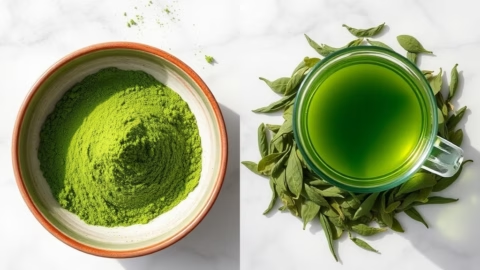
A typical serving of matcha uses roughly 1 to 2 grams of powder. Because you whisk and drink the whole leaf rather than steeping and discarding it, you consume more of the leaf’s caffeine than you would with loose-leaf green tea. That said, the numbers stay moderate.
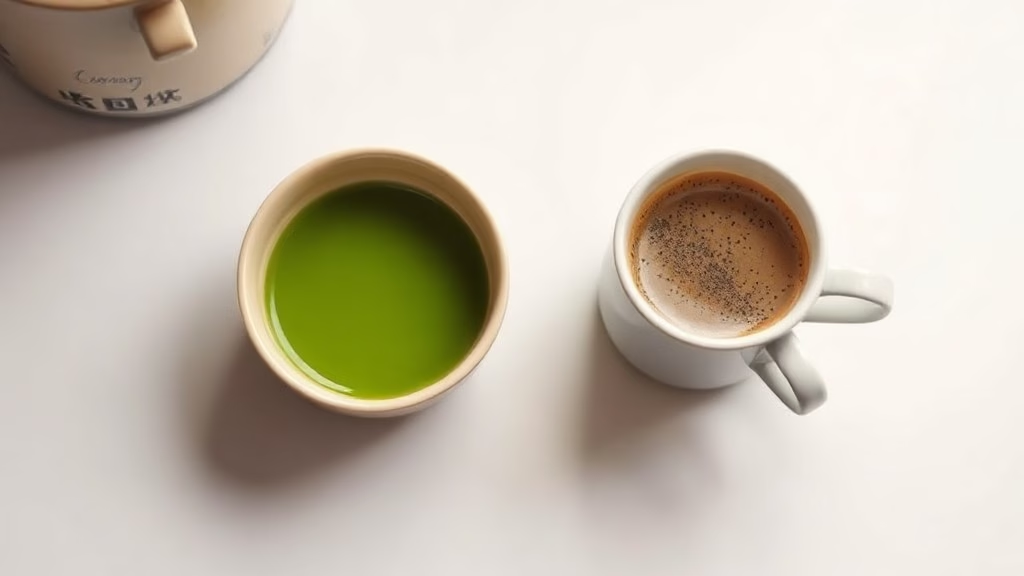
As an approximate, variable guide: a standard 1 to 2 gram serving of matcha delivers somewhere around 35 to 70 mg of caffeine. A more concentrated usucha (thin tea) bowl, whisked with a generous scoop, often lands near 60 to 70 mg. For comparison, a standard cup of brewed coffee sits around 95 mg. These figures vary considerably by grade, dose, and how you make it, so treat them as ballparks, not guarantees.
In other words, matcha usually gives you less caffeine than coffee but more than a quick cup of steeped green tea. It sits comfortably in the middle.
Matcha caffeine compared to other drinks
Here’s how a matcha bowl stacks up against other common drinks. All numbers are approximate ranges per typical serving and vary widely with preparation, bean or leaf, and serving size.
| Drink | Typical serving | Approx. caffeine (variable) |
|---|---|---|
| Matcha bowl (usucha) | 1–2 g powder | ~35–70 mg |
| Matcha latte | 1 tsp powder | ~30–70 mg |
| Green tea (steeped) | 1 cup (8 oz) | ~25–45 mg |
| Black tea (steeped) | 1 cup (8 oz) | ~40–70 mg |
| Brewed coffee | 1 cup (8 oz) | ~80–100 mg |
| Espresso | 1 shot (1 oz) | ~60–75 mg |
Notice how much the ranges overlap. A strong matcha and a modest coffee can land in nearly the same place, which is exactly why blanket claims rarely hold up.
What affects matcha’s caffeine
Three things move the needle most, and all of them are in your control once you know to look for them.
How much powder you use
This is the biggest lever. Two grams will naturally carry more caffeine than one. If you’re caffeine-sensitive, simply scoop less; if you want a lift, use a fuller measure. The powder dose matters far more than any label claim.
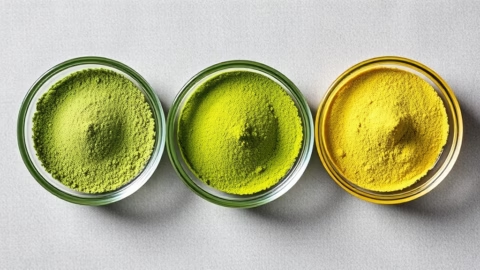
Grade and harvest
Water and whisking
Hotter water and a more vigorous whisk extract a touch more, though with matcha the effect is smaller than with steeped tea since you’re consuming the whole leaf regardless. Temperature matters more for flavor and avoiding bitterness than for caffeine.
Why matcha caffeine feels different
Here’s the part regulars notice first: the same milligram count from matcha simply feels smoother than coffee. The reason is L-theanine, an amino acid abundant in shade-grown green tea leaves.
L-theanine promotes a calm, focused state and appears to temper the sharp edges of caffeine’s stimulation. Instead of the spike-and-crash many people get from a strong coffee, matcha tends to deliver energy that comes on gently and tapers slowly. People describe it as “calm alertness.”
How much caffeine is too much?
For context, the U.S. Food and Drug Administration notes that roughly 400 mg of caffeine per day is generally not associated with negative effects for most healthy adults. You can read the agency’s overview on the FDA caffeine page.
At roughly 35 to 70 mg per bowl, you could enjoy several servings of matcha and stay well within that general guideline. That said, people vary enormously in their sensitivity, and pregnancy, certain medications, and some health conditions call for lower limits. This article is informational and not medical advice, so please talk to your doctor about what’s right for you.
Frequently asked questions
Does matcha have more caffeine than green tea?
Usually yes, per serving. Because you whisk and drink the whole powdered leaf instead of steeping and discarding it, a matcha bowl typically delivers more caffeine than an equivalent cup of steeped green tea, though both stay moderate.
Will matcha keep me awake at night?
It can if you’re sensitive or drink it late. The caffeine is real, even if it feels gentler thanks to L-theanine. Many people prefer to enjoy matcha in the morning or early afternoon and switch to something caffeine-free in the evening.
Is matcha caffeine stronger than coffee?
Per typical serving, usually no, a bowl of matcha generally carries less caffeine than a standard cup of brewed coffee. The experience can feel stronger or more sustained because of L-theanine, but the raw milligram count is normally lower.
How can I lower the caffeine in my matcha?
Use less powder, the single most effective lever. You can also choose a later-harvest culinary grade and keep your serving small. A half-scoop bowl is a lovely, lighter way to enjoy the flavor with less of a lift.