
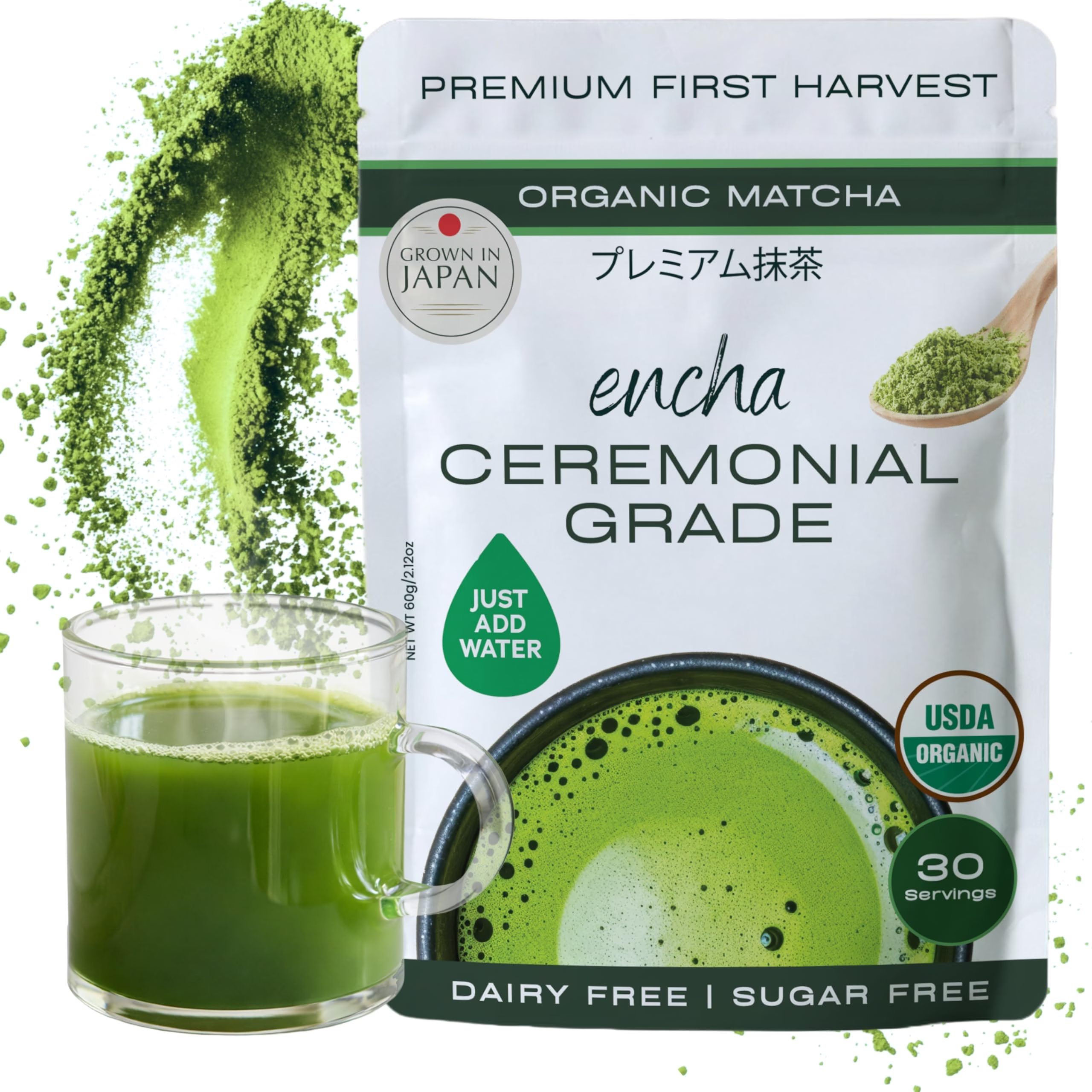
Encha’s ceremonial grade is organic matcha ground from first-harvest leaves grown on the company’s partner farm in the Uji mountains of Kyoto. This listing is the 60 g resealable pouch; Encha also sells 30 g pouches.
What the label and brand say
All Encha matcha is USDA certified organic, and the ceremonial grade uses the first, most tender spring harvest. Encha’s story centres on its founder, Dr. Li Gong, who chose an Uji farm that the company says switched to organic farming in 1987. Encha describes the ceremonial grade as smooth, full-bodied and delicately grassy, and positions it for traditionally prepared tea rather than lattes.
Why the organic mark matters
Organic certification is one of the few claims on a matcha package that an outside body audits, which makes it more meaningful than the word “ceremonial”, which has no legal definition. It tells you about cultivation practice. It does not tell you shading time, cultivar or grind quality, so it is one useful fact among several rather than a ranking.
Who it suits
Encha suits someone who wants organic, first-harvest matcha from a named Japanese region and drinks it straight. Like any ceremonial powder, it is best within about a month of opening, so the larger pouch makes most sense for daily drinkers; a 60 g pouch is about thirty 2 g bowls. The matcha batch calculator converts the pouch into servings and cost per drink.
How it compares
Against Ippodo’s blends, Encha offers audited organic cultivation and a single named region instead of a long blending tradition. Against the Jade Leaf Teahouse Edition, it is sourced from one region (Uji) rather than two. See our ceremonial matcha guide for the full comparison.
Details from Encha’s published product information and the Amazon listing. Check the pouch for current certification, date and directions.


