
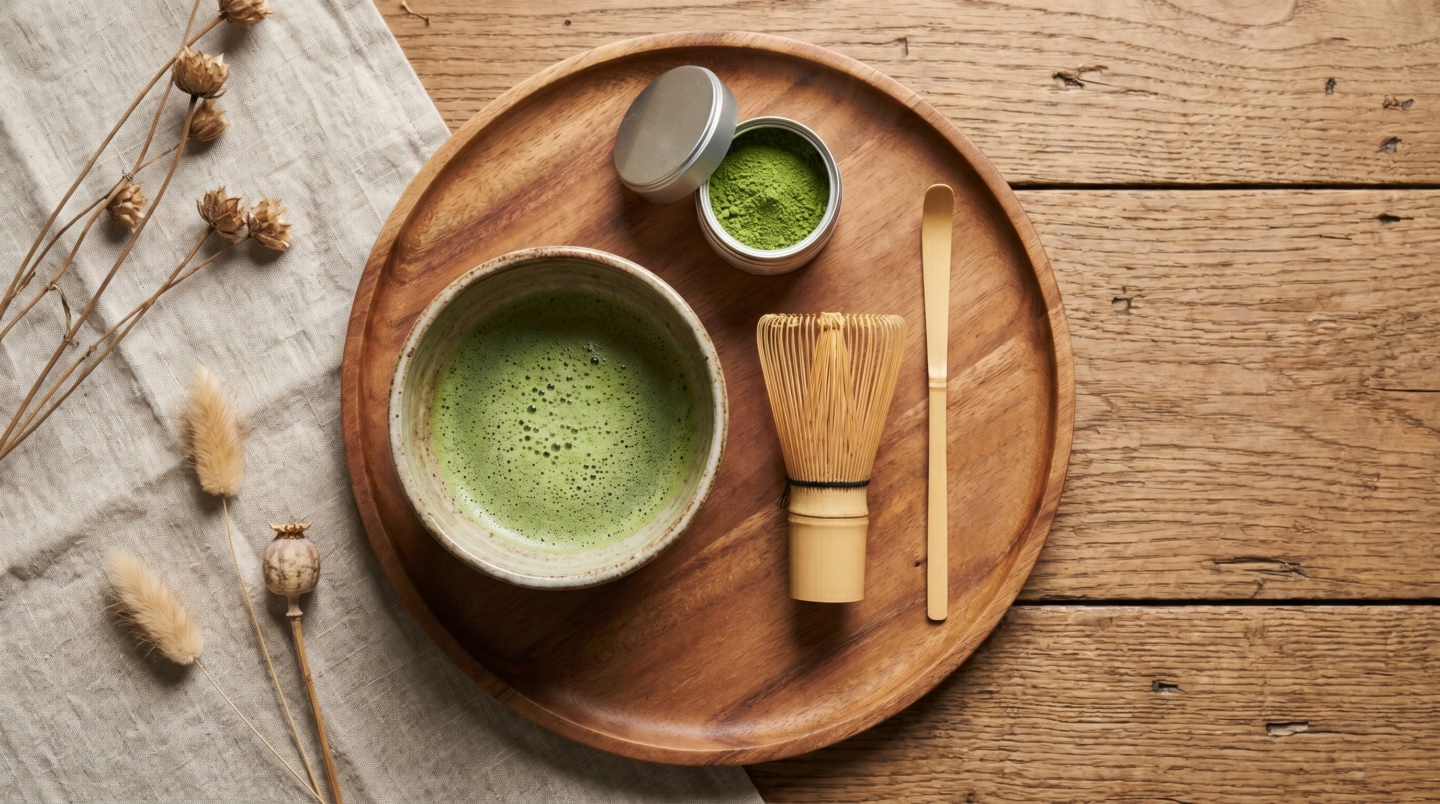
A matcha set is the obvious way to start, and it is usually the right call — buying a bowl, whisk, scoop, and rest separately means four decisions before you have made a single cup. But sets have a predictable weak point, and knowing it is worth more than any ranking. Bundles are priced to a number, and the piece that gets quietly downgraded to hit that number is almost always the whisk, because it is the component a newcomer cannot evaluate from a photograph. This guide compares the two sets in our catalog, explains what belongs in a complete kit, and shows when building your own is the better move.
Our top picks at a glance
Two sets, aimed at slightly different starting points. Names link to our product pages, where you can confirm current box contents before deciding.
| Pick | Best for | Notes |
|---|---|---|
| Jade Leaf Matcha Ceremony Set | Best complete kit | From a recognised matcha brand; includes a sifter and whisk holder, no powder, and a bowl only in some listings. |
| YIBO Matcha Whisk Set | Best first purchase | Seven-piece kit with sifter, whisk holder and spouted bowl; bowl diameter not stated. |
Set contents change between production runs more often than any other product category we cover, because bundles are re-specified to hit a price. Whatever a review says, read the current contents list on the listing you are actually buying from.
What belongs in a matcha set
A conventional kit has four or five items, and they are not equally important.
The bowl (chawan). Roughly 11–13 cm across and 7–8 cm tall, with a rounded interior floor. Width gives the whisk room to move, which is what creates foam; a sharp interior corner traps powder where the prongs cannot reach. This is the second most important piece.
The whisk (chasen). The most important piece and the one most often compromised. A real chasen is cut from a single node of bamboo, with the head split into prongs and curved inward. Cheaper bundle whisks are sometimes assembled from laminated strips, which shed prongs faster. Prong count should be 80–120 for thin tea; low-count whisks are for thick tea and will not foam well.
The whisk rest (kusenaoki). A small ceramic stand the whisk dries on. It looks decorative and is not — bamboo dries into whatever shape you leave it in, so a rest preserves the inward curl and measurably extends the life of a consumable item. Its presence in a set is a good sign about the set.
The scoop (chashaku). A curved bamboo scoop, conventionally about 1 gram per scoop, so a standard 2 gram dose is two scoops. Pleasant to use and the least functionally necessary item in the box: a half-teaspoon measure or a small kitchen scale is more accurate.
Sometimes a sifter, sometimes powder. A sifter is genuinely useful — matcha clumps because the particles are only a few microns across, and sifting dry powder is the real fix for grittiness. Included powder is a convenience, but check the net weight and whether it is ceremonial- or culinary-positioned.
Jade Leaf Matcha Ceremony Set — Best Complete Kit
The argument for a set from an established matcha brand is coherence: the tools and a 30-page preparation guide come from the same company, so a beginner is not guessing how the pieces fit together. It does not include matcha powder, so you choose the grade separately, and listings differ on whether a stoneware bowl is in the box. Jade Leaf’s ceremony set is positioned that way, and for someone who wants a single box that produces a decent bowl of matcha on the first attempt, that packaging logic is worth something real.
What we like is that “ceremony set” positioning generally implies the full complement of pieces rather than a bowl-and-whisk pair, which is where the cheapest bundles stop. What we do not love is the same caveat that applies to every set: the component list is the specification, not the brand name on the box. Ceremony sets are re-specified between runs, and whether the powder is included, what weight it is, and whether a whisk rest is in the box are all things that have varied in this category. Read the current contents list rather than a description written for an earlier version.
- Pros: Built around a recognised matcha brand; coherent pairing of powder and tools; positioned as a complete rather than minimal kit.
- Cons: Contents vary between production runs; whisk construction is rarely described in detail; bundle pricing usually means the whisk is the compromise.
YIBO Matcha Whisk Set — Best First Purchase
A starter kit is a deliberately low-commitment way in: until you know whether you will drink matcha three times a week or twice a year, a complete kit answers that question more cheaply than four considered purchases. The YIBO set is one of the most popular matcha kits on Amazon, and it is unusually complete for a beginner set: a glazed ceramic bowl with a thick pouring spout, a handmade bamboo whisk, a ceramic whisk holder, a bamboo scoop, a 5 ml measuring spoon, a measuring cup and a strainer for sifting.
What we like is that it includes the two pieces most starter kits leave out. The strainer lets you sift before adding water, the most reliable fix for gritty matcha, and the holder keeps the whisk’s prongs in shape as they dry. What we do not love is that the listing does not state the bowl’s diameter, so check it against the 11–13 cm guideline if whisking room matters to you, and the bundled whisk, like any, will need replacing with regular use. No matcha is included.
- Pros: Seven pieces including a sifter and whisk holder; spouted bowl for lattes; measuring spoon for consistent doses.
- Cons: Bowl diameter not stated; bundled whisk is a consumable; no matcha included.
When to build your own instead
Buy a set if you are starting out, buying a gift, or you want one decision instead of four. Build your own in three situations.
You already own a suitable bowl. A wide, rounded-interior bowl you already have is fine, and you only need a whisk, a rest, and a sifter. Paying for a duplicate bowl to get a whisk is poor value.
You drink matcha daily. The whisk is a consumable that wears out in months under daily use, while the bowl lasts indefinitely. Once you are replacing whisks regularly, you are already buying components individually, and a good standalone whisk is better than the one bundled to a price.
You want thick tea. Koicha needs a stiff, low-prong whisk, and sets ship high-prong whisks for thin tea. No general-purpose set will cover both preparations.
One caution in the other direction: buying separately does not automatically mean better. It means you are responsible for compatibility — specifically, that your whisk has clearance in your bowl. Check the bowl’s internal diameter against a standard whisk head before ordering both.
How to choose a matcha set
Read the contents list as a specification
Count the pieces. A bowl and whisk alone is a partial kit. A bowl, whisk, scoop, and rest is the conventional complement. If the listing describes contents only in pictures, treat that as missing information and check the manufacturer’s page.
Look for any detail about the whisk
Prong count and single-piece bamboo construction are the two facts worth finding. A listing that specifies “100-prong” and describes the head as cut from one piece is telling you something. A listing that says only “bamboo whisk” is telling you it would rather not say.
Check the bowl’s diameter, not its looks
Around 11–13 cm internal width is the working range. Narrower bowls crowd the whisk, which costs you foam and shortens the whisk’s life. A set photographed beautifully with an undersized bowl is a set that will frustrate you.
Treat the scoop as a bonus, not a feature
A chashaku holds roughly a gram, so the standard two-gram dose is two scoops. It is a nice object and a poor measuring instrument compared with a scale. Do not choose between sets on the basis of the scoop.
Check whether powder is included and what kind
If a set includes matcha, look at the net weight and the positioning. A small sachet of culinary-grade powder is a sample, not a supply. Our ceremonial matcha guide covers what the grade words on those packets do and do not mean, and the batch calculator converts a package weight into a realistic number of drinks.
How we evaluate
MatchaNest builds these comparisons from documentation rather than from a physical testing programme. That means manufacturer product pages, published component lists, materials and dimensions, care and replacement guidance, and the well-established relationships between whisk construction, bowl geometry, and preparation described above. We do not claim to have bought, unboxed, or used every set on this page, and we do not publish star scores that would imply we had.
Because bundle contents are re-specified more often than standalone products, this category deserves extra scepticism toward any description — including ours — that is more than a few months old. Confirm the component list, materials, and dimensions on the listing you are buying from. Read our editorial policy for the full standard and correction process, and our affiliate disclosure for how the site is funded.
Frequently asked questions
Is a matcha set worth it, or should I buy pieces separately?
A set is worth it for a first purchase, a gift, or anyone who does not yet know how often they will drink matcha. Buy separately once you know you drink it regularly, because the whisk wears out and you will be replacing it individually anyway.
What is the whisk holder actually for?
Drying. Bamboo prongs set into whatever shape they dry in, so a whisk dried flat splays outward and loses the inward curl that makes it whisk. A rest keeps the shape and extends the life of a component that is otherwise a fast-wearing consumable.
Do I need the bamboo scoop?
No. It is traditional and pleasant, and it holds roughly one gram, so two scoops make a standard dose. A small digital scale is more accurate and a half-teaspoon measure is close enough. Never let a scoop decide which set you buy.
Can I put set pieces in the dishwasher?
Never the bamboo whisk or scoop — dishwasher heat and detergent will destroy bamboo quickly. The bowl depends on its glaze and construction; handmade and crackle-glazed ceramics should be hand-washed. Rinse the whisk in warm water only, with no soap, and dry it on the rest.
Does the set include matcha powder?
Sometimes, and it varies between production runs of the same product name. Where powder is included it is often a small introductory quantity rather than a full tin. Check net weight on the current listing and assume you will need to buy powder separately fairly soon.
The verdict
If you want one box that covers everything and is built around a matcha brand rather than assembled generically, the Jade Leaf Matcha Ceremony Set is the more complete proposition. If the honest goal is finding out whether matcha becomes part of your routine before committing further, the YIBO Matcha Whisk Set answers that question cheaply. In both cases, do two things: read the current contents list rather than trusting the category name, and add a sifter if one is not in the box. A good whisk and unsifted powder still makes gritty matcha, and that one inexpensive addition fixes more first cups than upgrading any other piece in the set.