Editorial method: This guide is documentation-based. It does not claim a physical tasting or product test unless a dated protocol, sample source, conditions, and evidence appear on the page. Confirm package-specific ingredients, origin, certification, directions, caffeine, storage, and safety information with the manufacturer or physical label.
If you have spent any time exploring traditional Japanese tea, you have likely run into the question of usucha vs koicha — the two foundational ways matcha is prepared in the tea room. They use the same green powder, the same bowl, and the same bamboo whisk, yet they produce drinks so different in texture and intensity that newcomers often assume they are looking at two separate ingredients. Understanding the distinction is one of the quiet pleasures of learning matcha, and it will shape how you buy, whisk, and sip from here on.
Quick definitions: what usucha and koicha actually mean
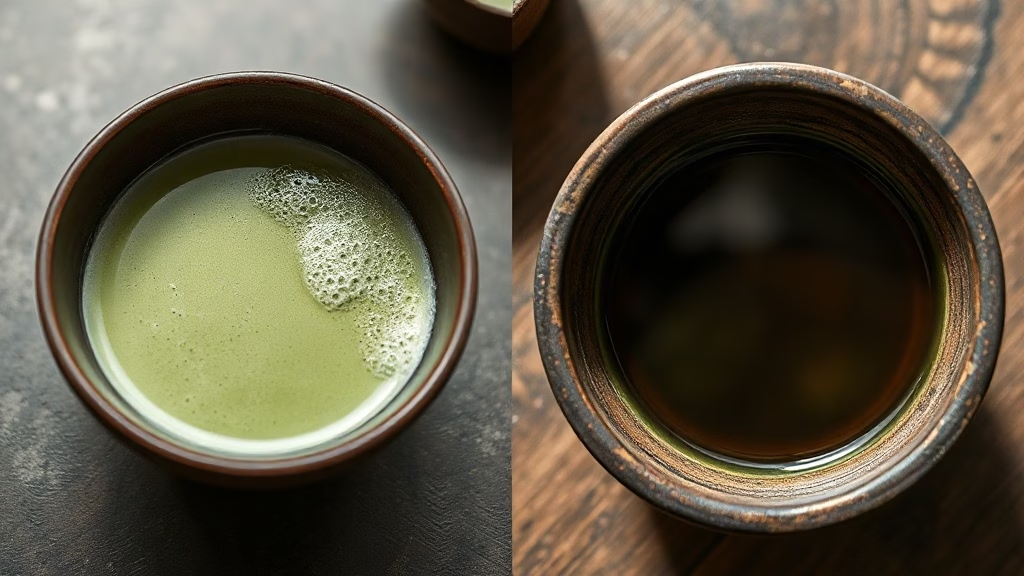
The terms describe concentration, not a particular type of leaf. Usucha ("thin tea") is the everyday preparation: a small scoop of matcha whisked briskly with hot water until a fine, frothy layer rises to the surface. It is light, slightly brisk, and approachable.
Koicha ("thick tea") is the ceremonial heart of a formal gathering. It uses far more powder and far less water, kneaded into a glossy, paint-like liquid with no foam. The result is dense, sweet, and intensely flavored — closer to drinking liquid matcha than to a light cup of tea.
When people compare usucha vs koicha, they are really comparing two ends of the same spectrum: one diluted and playful, the other concentrated and contemplative.
Usucha vs koicha: a side-by-side comparison
The table below summarizes the practical differences you will feel the moment you start whisking. Treat the measurements as starting points; every matcha and every palate is a little different.
| Feature | Usucha (thin) | Koicha (thick) |
|---|---|---|
| Powder amount | About 2 scoops (1.5–2 g) | About 4 scoops (3.5–4 g) |
| Water | About 70 ml (2.4 oz) | About 40 ml (1.4 oz) |
| Texture | Light, frothy, airy | Thick, glossy, syrupy |
| Taste | Fresh, slightly brisk, gentle bitterness | Deep umami, sweet, low bitterness |
| Whisking motion | Brisk "M" or "W" to build foam | Slow knead and fold, no foam |
| Matcha grade needed | Good ceremonial grade works well | Top ceremonial grade required |
| When served | Daily drinking, casual gatherings | Formal tea ceremony, special occasions |
How to make usucha (thin tea)
Usucha is where almost everyone begins, and for good reason: it is forgiving and quick. Start by warming your bowl with a little hot water, then discard it and dry the bowl. Sift about two scoops of matcha to remove clumps — this single step does more for a smooth cup than any expensive whisk.
Pour in roughly 70 ml of water at around 175°F (80°C). Boiling water scorches matcha and pushes it bitter, so let your kettle rest a minute first.
Now whisk. Hold the bowl steady with one hand and move the whisk briskly back and forth in a light "M" or "W" pattern from your wrist, not your shoulder. After ten to fifteen seconds a fine foam appears. Lift the whisk gently to settle the surface, and drink within a minute or two while the froth is alive. If you want a refresher on flavor, see what does matcha taste like.
How to make koicha (thick tea)
Sift about four scoops into a warmed, dried bowl. Add only a splash of water near 175°F (80°C) — around 40 ml total, but add it in stages.
Instead of whisking for foam, you knead. Press the whisk slowly through the paste, folding and blending in a gentle stirring motion until the matcha turns into a smooth, glossy, lump-free liquid the color of jade. It should pour like warm honey. There is no froth in proper koicha; a flat, lacquer-like surface is the goal. Sip slowly — the umami is remarkable.
Which should a beginner start with?
Start with usucha. It uses less of your precious matcha per cup, tolerates small mistakes in temperature and timing, and teaches you the wrist motion that underpins everything. You will learn to read the powder — how fresh matcha smells, how it clumps, how the foam behaves — without the pressure of getting an unforgiving thick tea right.
Once your usucha is consistently smooth and you have invested in a genuinely high-grade matcha, koicha becomes a rewarding next step. Many longtime drinkers keep two tins: an everyday tea for thin, and a special reserve for thick. There is no rush. Koicha will be waiting when you are ready.
The role of the bowl and whisk
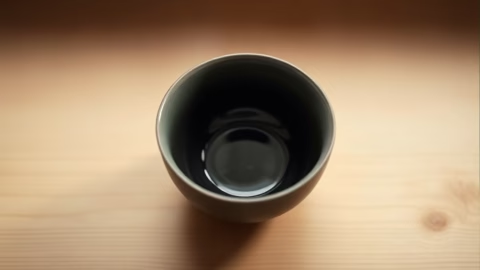
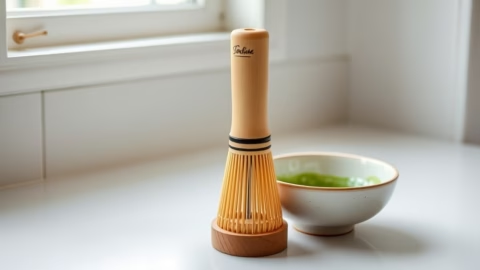
The tools are not decoration. A proper traditional chawan bowl is wide enough to let the whisk move freely and deep enough to hold the heat, which matters enormously for koicha's slow kneading. A cramped mug fights you at every stroke.
Frequently asked questions
Can I make koicha with any matcha?
No. Koicha concentrates flavor dramatically, so a lower grade will taste bitter and grainy. Use only top ceremonial-grade matcha made from young, shade-grown leaves for thick tea.
Why doesn't koicha have foam?
Koicha is kneaded rather than whisked for air. The goal is a smooth, glossy surface, not a frothy one, so you fold the powder into the water instead of whipping it.
Is usucha or koicha stronger in caffeine?
Per serving, koicha uses roughly twice the powder, so a bowl of thick tea generally delivers more caffeine and more umami than a cup of thin tea.
Do I need different bowls for each?
Not necessarily. A good wide chawan handles both, though many practitioners prefer a slightly deeper bowl for koicha to retain heat during the longer kneading.
Conclusion
The difference between usucha vs koicha is really a difference of intention: thin tea for the rhythm of daily life, thick tea for moments that deserve focus. Learn usucha first, let your hands grow confident, and then explore the quiet depth of koicha with a matcha worthy of it. With a good bowl, a fresh whisk, and a little practice, both styles are well within your reach — and both will reward you for years.