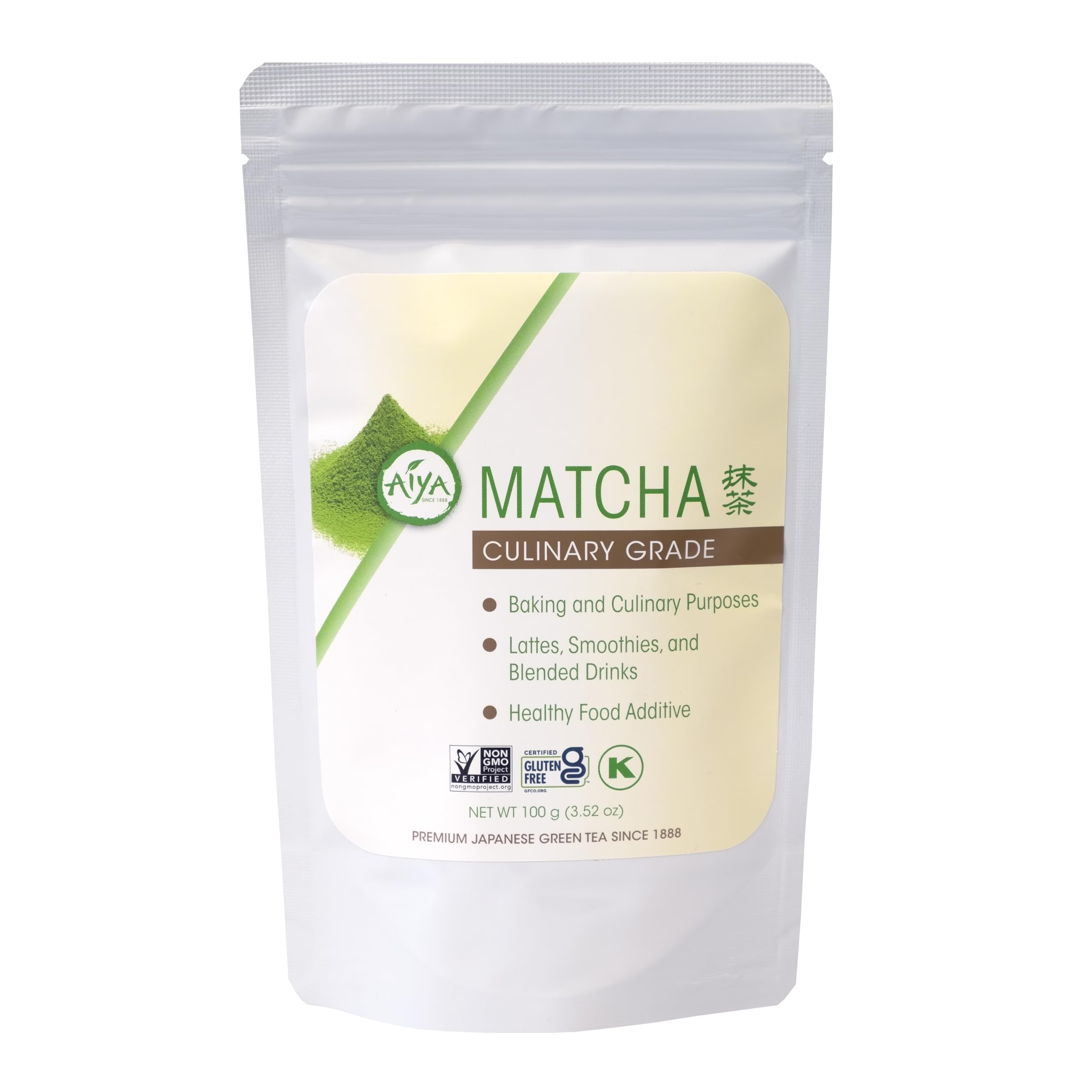
Aiya is a family-owned matcha producer founded in 1888 and run today by the fifth generation of the Sugita family. It is based in Nishio, in Aichi prefecture, one of Japan’s major matcha-growing areas. This listing is Aiya’s culinary grade in a 100 g bag; a separate USDA-organic culinary version is also sold.
What the label and brand say
The powder is 100% Japanese green tea, with no added sugar, and is kosher-certified, gluten-free and vegan. Aiya positions its culinary grade for baking, lattes and smoothies: matcha that is blended to hold its flavour against milk, sugar and heat rather than to be drunk on its own.
Why culinary grade exists
In a cake or cookie dough, matcha competes with butter, sugar and oven heat. Heat dulls chlorophyll, which is why baked matcha often turns olive, and delicate aromatics simply disappear. What survives is colour intensity and a bitter, vegetal backbone, which is what a culinary grade is selected for. Using ceremonial powder in baking is mostly wasted money.
Who it suits
It suits home bakers and anyone who uses matcha as an ingredient in larger amounts. Recipes often call for several grams per batch, so the 100 g bag goes further than a tin. It is not the best choice for drinking straight, where culinary grades taste noticeably more astringent. The matcha batch calculator scales a gram-based recipe to any batch size.
How it compares
In our latte matcha guide it is the baking and volume pick. Choose Aiya’s organic culinary version if certification matters, or Jade Leaf’s organic culinary grade for a two-region organic alternative.
Details from Aiya’s published product information and the Amazon listing. Check the bag for current ingredients, date and directions.